KS ENG

Chairman's Message

Dear Members of the Verein für Socialpolitik,

As the year draws to a close, we would like to take this opportunity to update you on the latest developments surrounding the Verein für Socialpolitik.

A highlight of the year was undoubtedly our Annual Conference in Cologne. More than 700 participants enjoyed a stimulating main conference on the topic “Revival of Industrial Policy.” The open meeting impressively showcased the breadth and vitality of our field at a high academic level. The presentation of numerous awards was among the special moments of the event. We are already looking forward to welcoming you to our next Annual Conference in Innsbruck, from July 13 to 16!

Our Open Science Initiative has gained momentum over the past year. On our website, you can find an introductory video in German and a wide range of information on this topic. During the Cologne conference, a hands-on workshop and a panel discussion provided valuable insights, and a member survey confirmed the great interest in Open Science among our members.

The Association is now also more active on Bluesky and LinkedIn, where we regularly share updates about our activities and offer opportunities for members to connect with colleagues. We look forward to engaging with you there! You can find our profiles on LinkedIn and Bluesky.

I wish you a peaceful end of the year and look forward to our continued collaboration in the coming year!

With warm regards,

Klaus M. Schmidt
Chair of the Verein fuer Socialpolitik

Header

Standing Field Committees

Currently, the chairmanship of the Committee on Economic Policy has rotated as scheduled. We welcome the new chairman, Justus Haucap, and thank all committee chairs for their dedication.

Header 2
Doris Weichselbaumer

Promoting and Networking Women Researchers at This Year’s VfS Conference

At this year’s VfS Annual Conference, we were once again able to offer a variety of events aimed at promoting and networking women researchers - combining both established and new formats.

A staple in the program for several years has been the Women’s Mentoring Workshop. It is aimed at early-career women researchers and provides insights into career opportunities at universities and research institutions. Participants received valuable tips on research strategies and work-life balance. The workshop’s goal was to expand both professional and personal networks and to gain greater confidence in career planning.

New this year was the Social Media Workshop for Women. This provided an opportunity to examine and strategically develop one’s online presence on platforms like LinkedIn or Bluesky. A particular focus was placed on handling hate speech sensitively and addressing the specific challenges that FLINTA individuals encounter on social media.

During the subsequent Women’s Networking session, participants were able to deepen the workshop content, make new connections, and exchange experiences from daily research life - creating an inspiring space for networking and mutual support.

I would like to thank all mentors for their support and look forward to putting together another - hopefully equally engaging - diversity program next year.

Header 3
Arne Uhlendorff

Opening Pathways into Academia

The VfS continues to be deeply committed to supporting the next generation of economists. At this year’s Annual Conference, there were once again numerous offerings specifically for early-career economists. Among them was our Job Market Seminar, which I conducted together with Hans-Martin von Gaudecker (University of Bonn), Philip Jung (University of Dortmund), and Pia Pinger (University of Cologne). Over two intensive days, we worked with seven PhD students on how to navigate interview situations with confidence and what is particularly important when presenting a “Job Market Paper.”

In addition, the association supports young researchers through established programs such as the „Abiturpreis Wirtschaft“ and the VfS Conference Subsidy Program. The latter recognizes early-career researchers who deliver a presentation at an internationally recognized conference. Given the large number of applications, the winners were ultimately chosen by lottery: 87 recipients will each receive a grant of €300. This is made possible through the association’s funds, and in particular through the support of the Swiss National Bank (SNB). We sincerely thank the SNB for its generous financial support of the program and congratulate all prize winners.

Header
GER und PWP

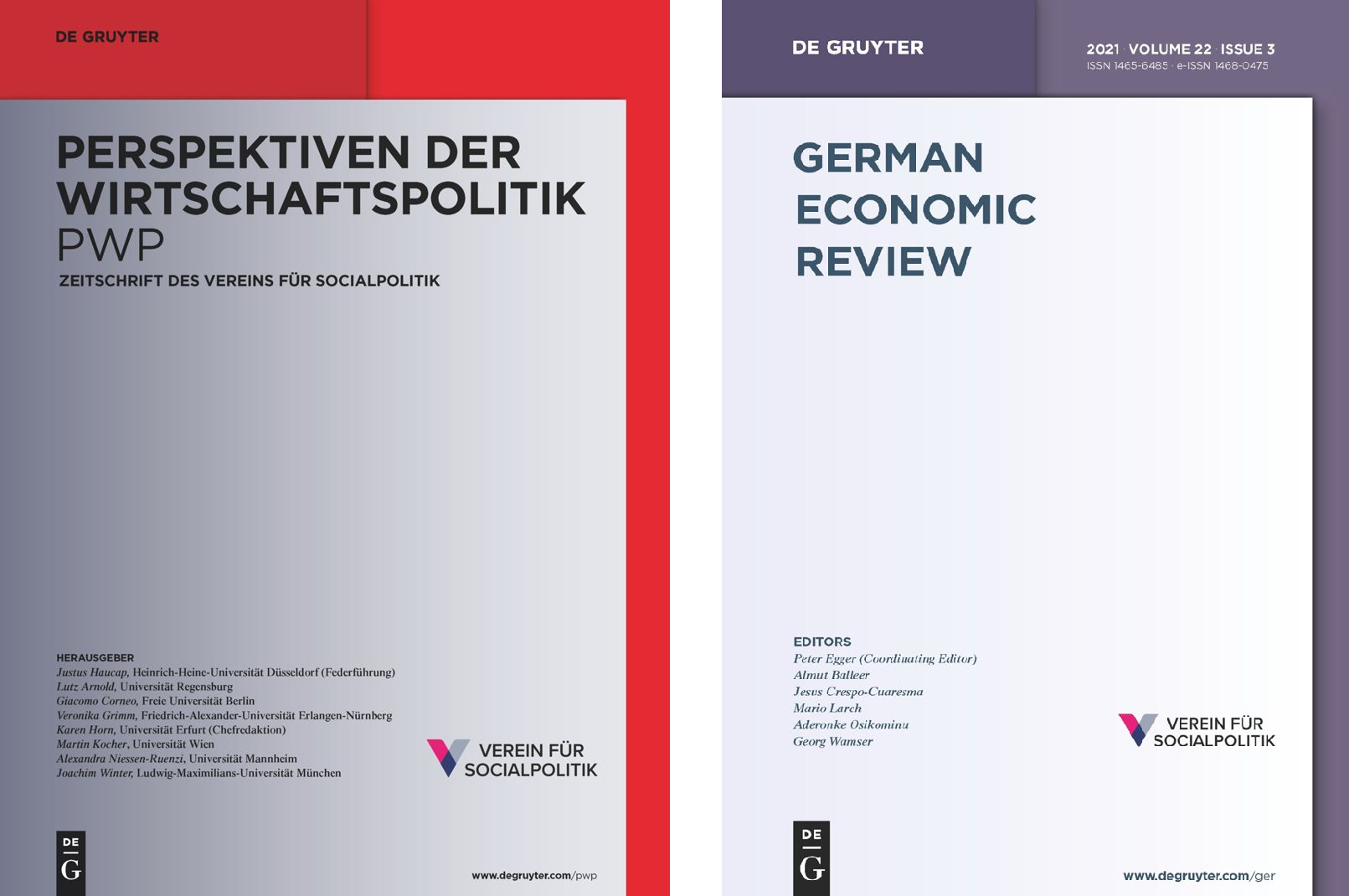
Perspektiven der Wirtschaftspolitik

Dear Readers,

After our two special issues this summer on fiscal rules and industrial policy, the current issue of Perspektiven der Wirtschaftspolitik returns to a non-thematic format.

In the interview, Karen Horn speaks with Axel Börsch-Supan about demographic change and its implications for social spending, about weak economic growth, and about current proposals for pension reform.
The research articles in this issue address public acceptance of potential reform alternatives to the citizen’s income (Bürgergeld), a proposal for electoral reform, and the role of collective bargaining arbitration in preventing labor disputes.
Further contributions examine how the accessibility, capacity, and opening hours of childcare facilities contribute to differences in employment between women and men, and what role insights from behavioral and lay economics play in shaping public acceptance of economic policy measures.

You can find the current issue here. We hope you enjoy reading it (in German).

In 2026, there will once again be two special issues: Issue 1/2026 will focus on geoeconomic challenges and their implications for the European Union. Issue 3/2026 will be a conference-related special issue on behavioral economics.

As we have mentioned several times, Perspektiven der Wirtschaftspolitik is now fully accessible via Open Access. Please feel free to recommend the journal to students and anyone with an interest in economics!

Yours,
Achim Wambach

German Economic Review

Dear Readers,

With the transition of the German Economic Review (GER) to Open Access, our association’s journal has taken an important step toward the future. The editors are now focusing on two key aspects essential for the journal’s long-term success: a continuous increase in submissions and a further enhancement of the quality of published articles.

Another goal of the GER is to improve the reproducibility of scientific results. We are therefore working intensively on a sustainable repository solution that will enable researchers to document their work transparently and in a way that can be replicated.

As the coordinating editor of the German Economic Review, I am also in dialogue with editors of international academic journals to discuss shared perspectives for the future and to learn from one another.

I very much hope that members of the Verein für Socialpolitik, as well as interested authors outside the association, will continue to support our efforts with high-quality submissions and numerous citations.

Yours,
Hartmut Egger

Header
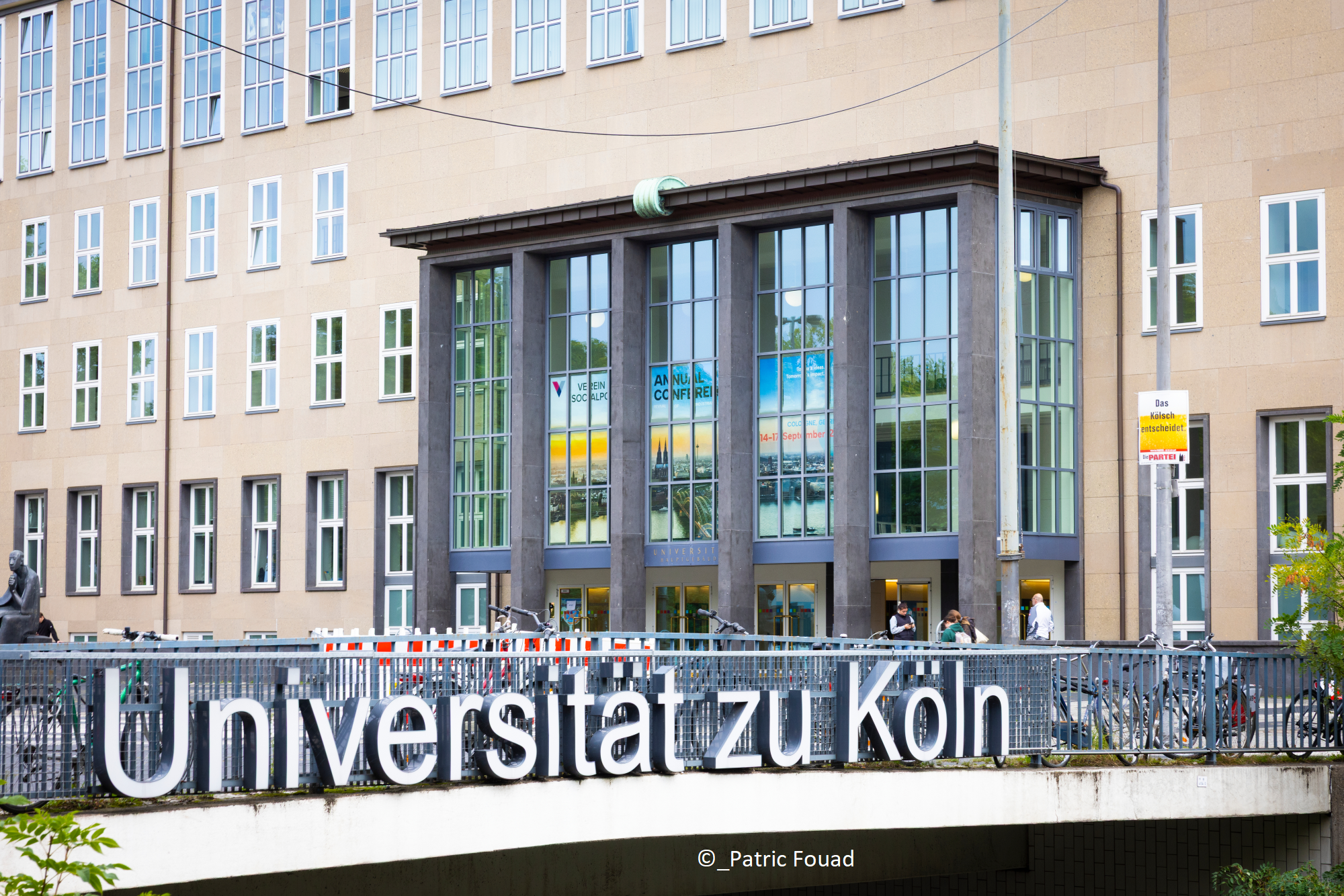
Foto Universität zu Köln

VfS Annual Conference 2025: A Look Back

From September 14 to 17, the VfS headed to Cologne for the Annual Conference 2025. The host was the University of Cologne. The theme: Revival of Industrial Policy.

With over 700 participants, the conference demonstrated that state-led industrial policy - long considered a marginal topic in economics and public discourse - is once again gaining attention. The three keynote speeches and the main conference panel sparked lively discussions. Pol Antràs (Harvard University) opened the main conference with a talk on global supply chains. John Vickers (Oxford University) addressed questions concerning the interaction of industrial and competition policy in his keynote, and Réka Juhász (University of British Columbia) concluded the conference with a lecture on the key factors for targeted industrial policy.

Two highlights of the conference took place on Tuesday: In the evening, the reception at the Atrium of the Rautenstrauch-Joest Museum at Neumarkt included the presentation of the Gustav Stolper Award. This year’s recipient was Nicola Fuchs-Schündeln, who accepted the award from the hands of the chair Klaus M. Schmidt to the applause of several hundred guests.

Earlier that afternoon, Claudia Steinwender had already been awarded the Hermann Heinrich Gossen Prize for her research. The Reinhard Selten Prize for the best paper presented at the conference went this year to Kai Fischer and Honghao Zhang (see interviews below). Ulrike Malmendier was honored for her contributions to economics in the German-speaking world and delivered the Thünen Lecture.

More than 200 students from across Germany attended the Student Day. They participated in workshops and lectures, guided by economists, and discovered a passion for the field. We sincerely thank the Dr. Hans Riegel Foundation for their generous financial support.

The conference was organized by:

  • Achim Wambach (ZEW, Head of the Core Conference)
  • Philipp Schmidt-Dengler (University of Vienna, Head of the Open Meeting)
  • Felix Bierbrauer (University of Cologne, Head of Local Organization)

We thank them, the conference leaders, for their professional planning and execution, and in particular the entire organization team at the University of Cologne for their warm hospitality. Our thanks also go to the exhibitors and sponsors who supported and made the conference possible.

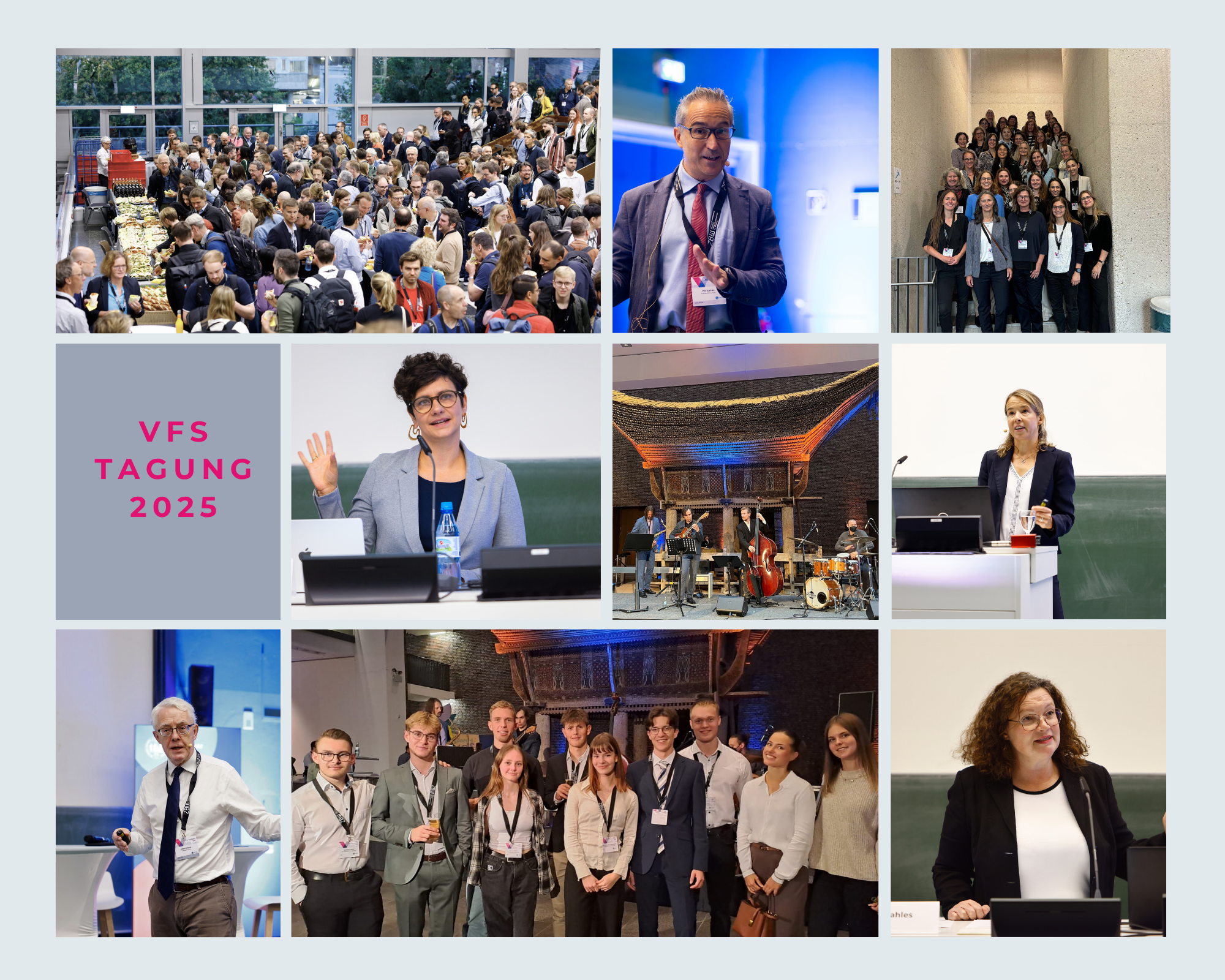
Below you can find some snapshots
© Patric Fouad https://www.patricfouad.de

Collage

Header
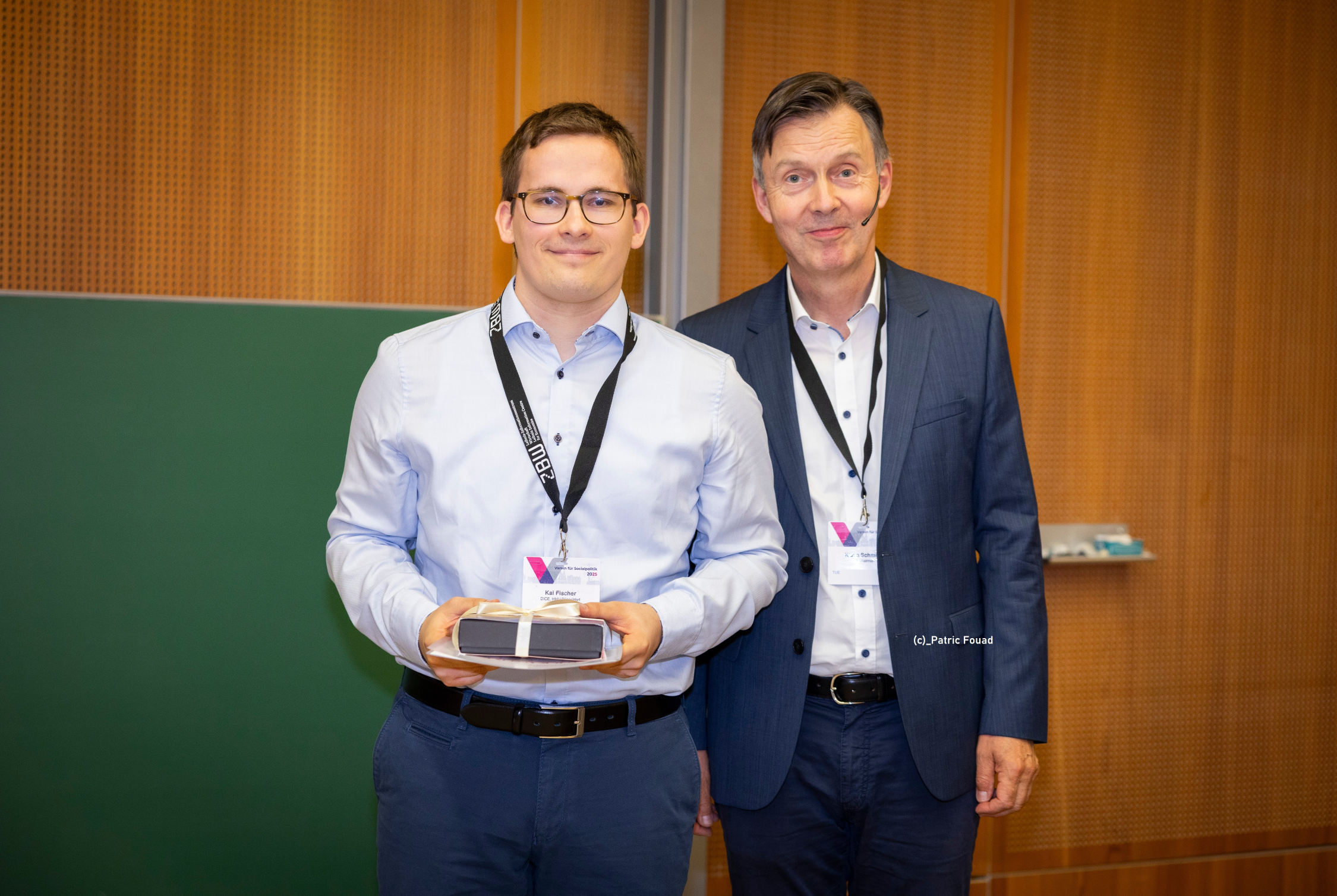
Kai Fischer & Klaus Schmidt

Reinhard Selten Award

The Reinhard Selten Prize 2025 was awarded to Kai Fischer (Heinrich Heine University Düsseldorf) and Honghao Zheng (KU Leuven) for their paper “Demand (Un)certainty and Productivity: Evidence from the German Coal Mining Industry.” The Verein für Socialpolitik awards the €3,000 prize annually at its Annual Conference to papers distinguished by originality, the significance of the research question, and rigorous methodology.

We asked Kai Fischer to answer three brief questions:

What has recently surprised you in your research?
In research, it is always surprising how much a project can evolve over time. What initially seems like a clearly defined question often takes a completely new direction through data work and deeper engagement with the topic. This process frequently changes not only the perspective on the problem but also the methodological approach.

What can economics learn from science?
In science resilience, perseverance, and persistence are central virtues on the path to robust results. Especially in economically uncertain times, these qualities prove to be indispensable in practice as well.

Your unconventional success tip for early-career researchers?
I believe that deep institutional knowledge in industries or contexts that have been little studied is an often underestimated recipe for success. What may initially seem like niche knowledge can turn out to be crucial expertise for identifying and pursuing new or overlooked research questions.

Thank you, Kai!

For more information on the Reinhard Selten Award, click here.

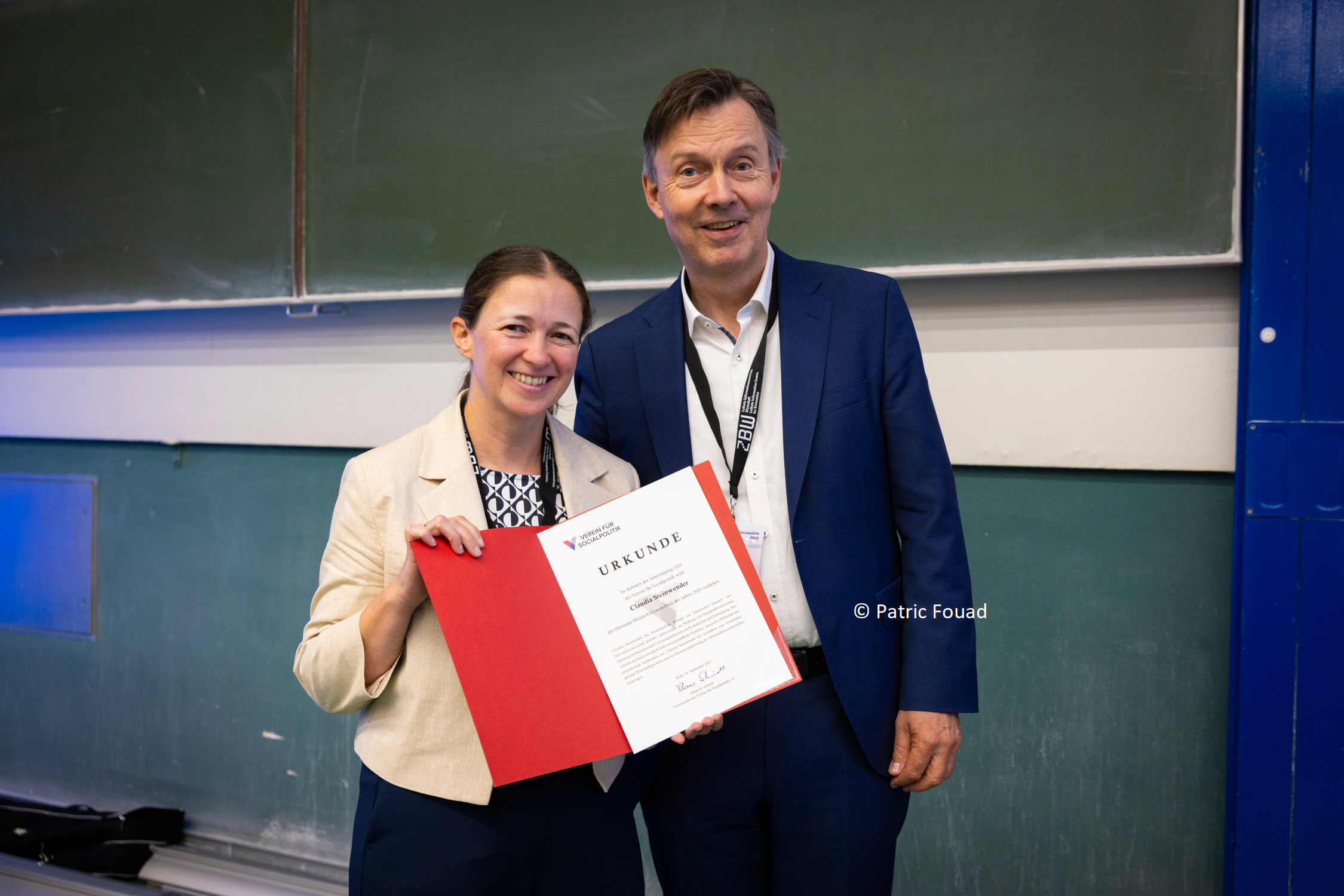
Claudia Steinwender & Klaus Schmidt

Hermann Heinrich Gossen Award

The Hermann Heinrich Gossen Prize 2025 was awarded to Claudia Steinwender (LMU Munich) for her outstanding contributions to empirical trade and innovation economics. The €10,000 prize recognizes her research work of exceptional scientific excellence. Through her work, she has significantly advanced the understanding of global economic processes and contributed to the internationalization of economics.

We asked Claudia Steinwender to answer three brief questions:

What has recently surprised you in your research?
The exciting thing about research is that it constantly surprises you—for example, when I discover unexpected data patterns. I believe this is exactly what makes research so thrilling for most researchers - it’s always exciting, there is always something new to uncover. I still remember the words of my PhD advisor, Prof. Steve Pischke: “If research were easy, it would be called ‘search’ and not ‘re-search’…” - although by now I think it should be called “re-re-re-re…search!”

Recently, this happened in a project where we expected the introduction of bankruptcy laws in 19th-century USA to stimulate growth in the agricultural sector. The opposite occurred. It became particularly interesting when we uncovered the reason: bankruptcy law allowed farmers to obtain debt relief, but they could keep a small part of their farm, which they could then sell. They used the resulting cash to move to cities with booming industrial sectors - ultimately promoting industrialization in the United States.

What can economics learn from science?
Still and always: correlation does not imply causation! It is tempting to treat data patterns that support one’s beliefs as “proof” of one’s argument. But too often, alternative explanations exist, and ignoring them leads to wrong decisions.
With artificial intelligence and big data, companies today have enormous opportunities for in-depth data analysis. This offers great potential, but can also lead to errors if the underlying assumptions and models are misinterpreted. I therefore strongly recommend that businesses hire our economics graduates, who have learned critical thinking - a skill that becomes even more important, not less, in the age of AI.

Your unconventional success tip for early-career researchers?
This brings me back to the first question. I notice that many PhD students are often disappointed when their empirical results differ from their expectations. They ask themselves: What did I do wrong? Why are my data so “strange” and seemingly flawed? Why am I getting “nothing” from this?
But research can advance much further if one seeks new explanations for unexpected results. Analyses, of course, must be carried out correctly. But then it is truly worth thinking deeply about why something is the way it appears.

Thank you, Claudia!

For more information on the Hermann Heinrich Gossen Award, click here.

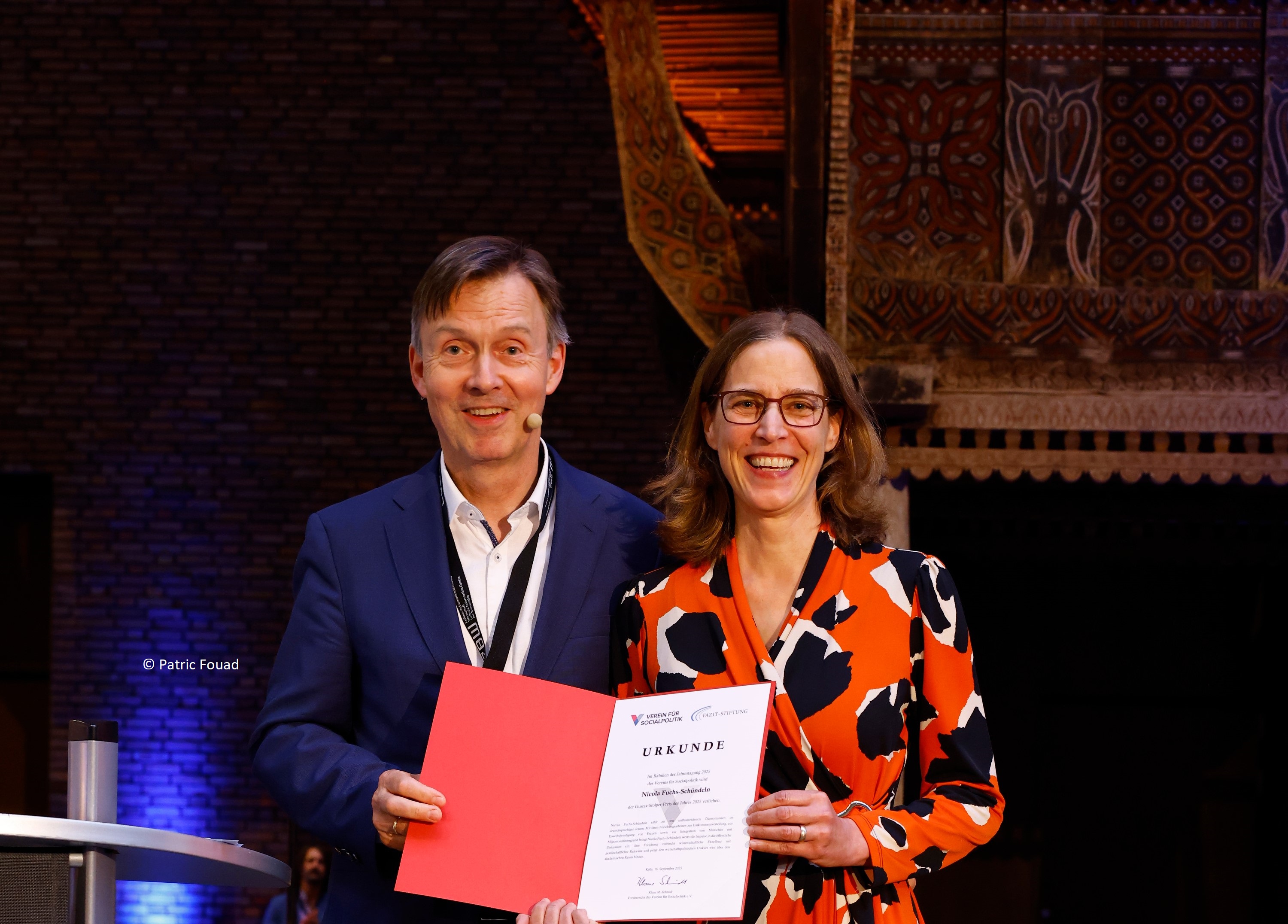
Klaus Schmidt & Nicola Fuchs-Schündeln

Gustav Stolper Award

The Gustav Stolper Prize 2025 was awarded to Nicola Fuchs-Schündeln (WZB). Nicola Fuchs-Schündeln is one of the most influential economists in the German-speaking world. Through her research on income distribution, women’s labor market participation, and the integration of people with a migration background, she provides valuable insights to public debate. Her work combines scientific excellence with societal relevance and shapes economic policy discussions well beyond the academic sphere. The prize carries a €5,000 award and was presented on the evening of September 16, 2025, at the Rautenstrauch-Joest Museum.

We asked Nicola Fuchs-Schündeln to answer three brief questions:

What has recently surprised you in your research?
I am currently conducting surveys myself, which is largely new territory for me. Two results from very different research projects surprised me: First, how accurately spouses can predict each other’s labor response to a future pension increase. Second, that Germany, in terms of workplace AI adoption, is clearly behind the USA but ahead of Italy and France.

What can economics learn from science?
Especially in labor market research, we have insights that are also relevant for businesses, for example the reasons behind the demand for a four-day workweek. But science can also learn from business, particularly when it comes to the speed of action. Both science and business suffer under bureaucracy—whether imposed externally or self-imposed.

Your unconventional success tip for early-career researchers?
Co-authors are extremely important—not only for the success of the research project but also for the enjoyment of the work.

Thank you, Nicola!

For more information on the Gustav Stolper Award, click here.

Header
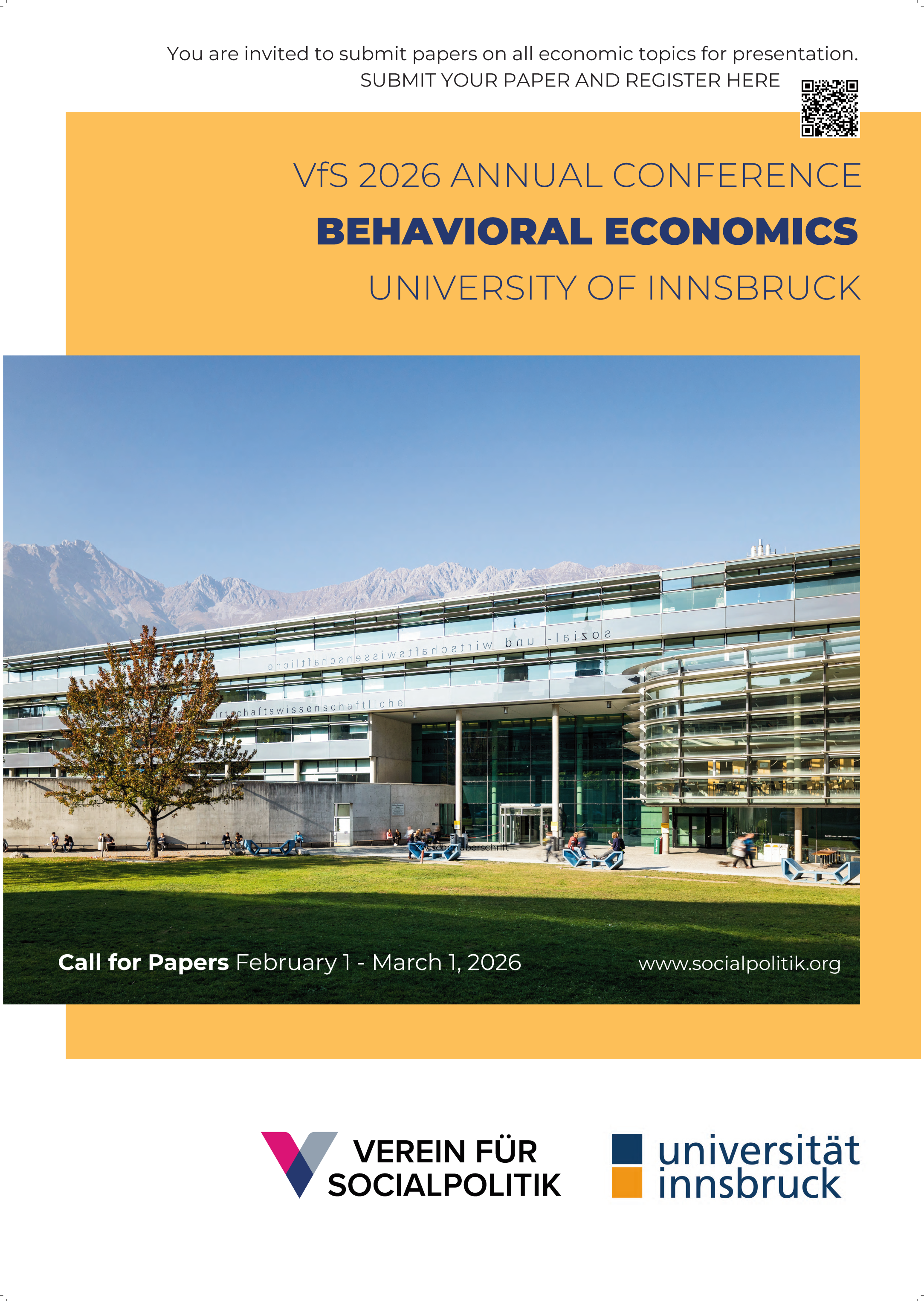
Plakat Jahrestagung 2026

Annual Conference 2026: Behavioral Economics

“After the conference comes the conference” - we’re already looking forward to seeing you next year at the University of Innsbruck!
Save the date: September 13–16, 2026.

The theme of the main conference will be Behavioral Economics. In real life, people often make decisions that differ from the assumptions of classical economic models. Behavioral economics helps us model individual and collective choices more realistically, offering exciting insights and valuable guidance for evidence-based economic policy.

  • Local Organization Chair: Markus Walzl (University of Innsbruck)
  • Core Conference Chair: Urs Fischbacher (University of Konstanz)
  • Open Meeting Chair: Conny Wunsch (University of Basel)

Early next year, we will announce the Call for Papers for the open conference sessions. Submissions are welcome as individual papers or organized sessions. Deadline: March 1, 2026.

We can’t wait to welcome you to Innsbruck for what promises to be an inspiring and engaging conference!

Subscribe to our Job Alert and stay up to date with the latest job openings.

  • Job Alert
  • Job Board

Feel free to follow us on social media as well: LinkedIn, Bluesky, and X.

Here you can find an overview of the association’s press coverage.

Merry Christmas

Heartfelt Thanks and Best Wishes for the Year’s End

We would like to extend our sincere thanks to all members who have been part of the VfS for many years - and equally to those who have recently joined us. Your support and engagement are essential in keeping our association vibrant and helping it continue to grow.

If you have any questions, ideas, or suggestions, the VfS office in Berlin is always happy to assist you.

Looking back on the inspiring Annual Conference in Cologne, we are already looking ahead with great anticipation to Innsbruck 2026 and Hanover 2027, the upcoming locations of our VfS conferences.

We wish you a Merry Christmas, relaxing holidays, and a dynamic start to the New Year!

X
Linkedin
Bluesky